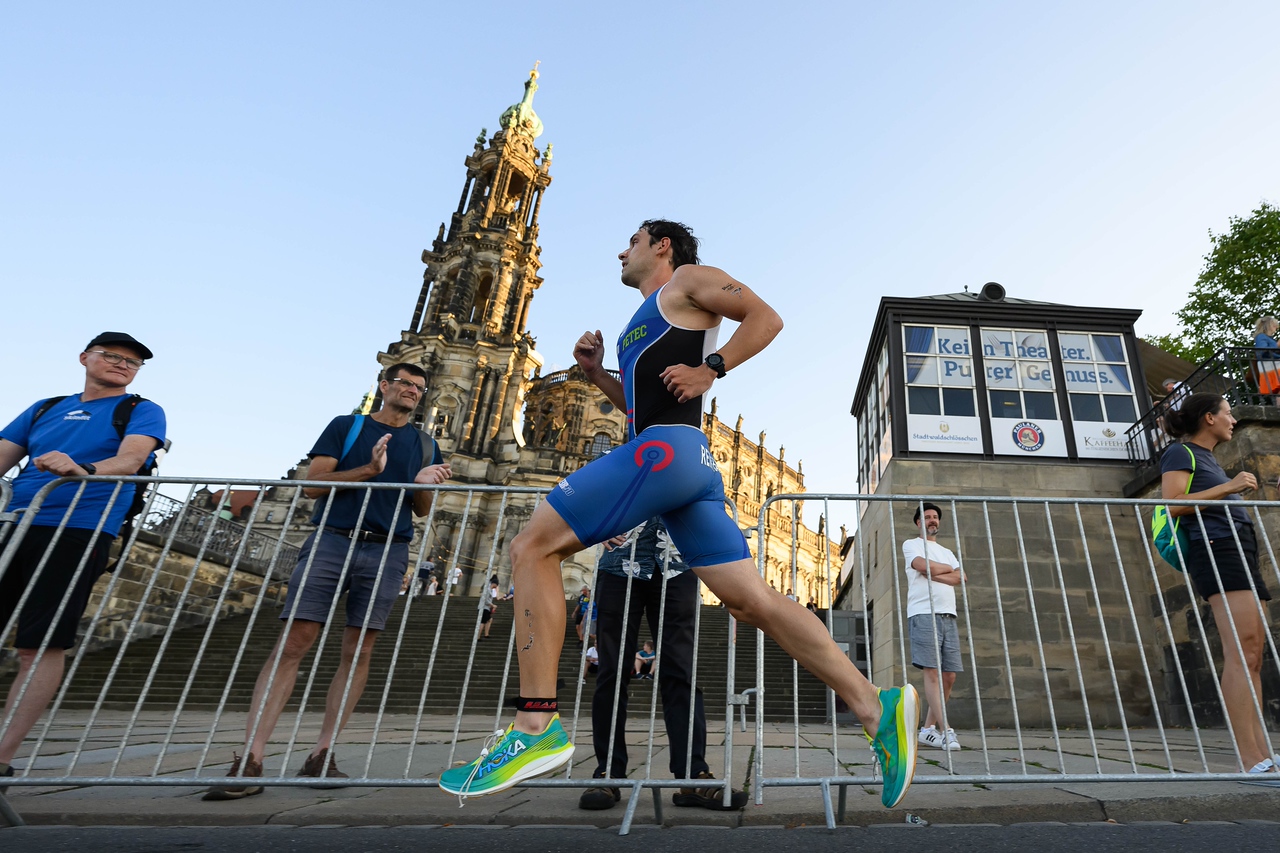
The Distance Spectrum
There is a moment in every runner’s life when the finish line of one distance starts to feel like the starting line of another. You crush a 5K PR and immediately wonder what a 10K would feel like. You finish a half marathon and catch yourself googling “marathon training plans” before you have even unlaced your shoes. Eventually, on a lonely stretch of trail at mile 22, you hear yourself say the words no partner ever wants to hear: “I think I want to try an ultra.”
The fundamental principles of endurance training remain constant across every distance. Stress the body, let it recover, and it adapts. Yet the emphasis shifts considerably from one distance to the next. What makes you fast at 5K can work against you in the marathon, and what prepares you for a marathon covers only a fraction of what an ultramarathon demands.
This article walks through the distance spectrum to explain what changes, why it changes, and how to manage the transition.
5K and 10K: The Engine Room
At shorter distances, running is an intensity sport. Your aerobic engine matters, of course, but the differentiator between a good 5K and a great one is your ability to sustain effort at or near your VO2max, the maximum rate at which your body can consume oxygen [1].
A well-structured 5K/10K training block prioritizes:
- VO2max intervals. Hard efforts of 3-5 minutes at 95-100% of max heart rate, with equal recovery. Think 800m and 1K repeats on the track [2].
- Lactate threshold work. Tempo runs at the pace you could hold for roughly an hour, teaching your body to clear lactate efficiently [3].
- Speed and neuromuscular power. Short, explosive strides and hill sprints that improve running economy and recruit fast-twitch fibers [4].
- Aerobic base. Easy running still dominates volume, typically 75-80% of weekly mileage [5], but it serves as the foundation for intensity rather than the primary training stimulus.
The weekly mileage for a competitive 5K runner varies widely by level, but research on nationally competitive runners reports averages of roughly 50-70 km (30-45 miles) per week, while elite athletes may run considerably more [13]. The key sessions, the ones that drive fitness forward, are the hard ones. Everything else supports recovery and maintains the aerobic platform those sessions rest on.
If you are running 5K and 10K races on EndurexAI, your training plan will weight intensity metrics heavily. The platform tracks your VO2max estimates and lactate threshold paces, adjusting interval prescriptions as your fitness evolves. When your CL rises and your threshold pace drifts upward, the system recalibrates so that you are always training at the edge of your current capacity.
Half Marathon: The Sweet Spot
The half marathon is where things get interesting. At 13.1 miles, you are too far from the finish line to rely on raw speed, but close enough that pace still matters enormously. This distance lives at the intersection of aerobic power and stamina, and training for it requires a careful blend of both.
The emphasis shifts:
- Threshold running becomes the centerpiece. Your half marathon pace sits remarkably close to your lactate threshold [3]. Long tempo efforts of 6-10 miles at or near this intensity are the cornerstone sessions.
- VO2max work remains relevant but moves to a supporting role. One session per week keeps the top end sharp without draining recovery resources.
- The long run grows in importance. Where a 5K runner might cap their long run at 10-12 miles, half marathon training pushes this to 14-16 miles, with portions at goal pace.
- Weekly mileage climbs. Published surveys of half marathon and marathon training show that competitive half marathoners commonly train between 60 and 100 km (roughly 40-65 miles) per week [13]. The extra volume builds the muscular endurance and fat-burning capacity needed to hold pace deep into the race.
The half marathon is often called the “thinking person’s race” because pacing execution matters as much as fitness. Go out too fast and you will pay dearly in the final 5K. Go out too conservatively and you will leave time on the course. EndurexAI models this dynamic by projecting race paces from your training data, giving you a realistic target pace window rather than a single number, because race day conditions, fatigue, and terrain all introduce variability.
Marathon: The Long Game
Moving from half marathon to marathon means entering a different physiological domain. The marathon is an endurance event in the deepest sense of the word, and it introduces a constraint that shorter distances never force you to confront: glycogen depletion.
Your body can store roughly 2,000 calories of glycogen in your muscles and liver [6]. A marathon burns somewhere between 2,500 and 3,500 calories, depending on your size and pace [7]. Simple math reveals the problem. No matter how fit you are, you will run out of your primary fuel source before you reach the finish line, unless your training has taught your body to burn fat more efficiently and you execute a fueling strategy during the race.
Marathon training reorients around several new priorities:
- The long run becomes the signature session. Runs of 18-22 miles, often with the final third at or near marathon pace, simulate the physiological demands of race day. These runs teach your body to oxidize fat at higher intensities [6][7] and your mind to keep pushing when glycogen stores are fading.
- Volume takes precedence over intensity. Elite marathon programs commonly prescribe 130-200+ km (roughly 80-125 miles) per week, while sub-elite and recreational marathoners may train on 65-130 km (40-80 miles) per week, with the bulk at easy aerobic pace [14]. High-intensity work does not disappear, but it shrinks to one or two sessions per week.
- Fueling becomes a trainable skill. Practicing with gels, drinks, and solid food during long runs is not optional. Your gut needs to adapt to absorbing calories while blood flow is directed to working muscles [8].
- Pacing discipline is essential. The marathon punishes early aggression more brutally than any other distance. Research on pacing strategy in major marathons shows that even modest positive splits, where the second half is run slower than the first, are associated with significantly slower finishing times compared to even or slightly negative splits [15].
On EndurexAI, marathon training plans track more than just your running metrics. The platform monitors your long run progression, ensures your CL is building at a sustainable rate (typically 3-7 points per week), and uses your Form to time recovery weeks so you arrive at peak long runs feeling capable rather than crushed. The AI coach can flag when your training load is escalating too aggressively, a common trap for first-time marathoners who confuse volume with fitness.
Ultra: Beyond the Marathon
If the marathon is where running becomes an endurance sport, the ultramarathon is where it becomes a survival sport. Distances of 50K, 50 miles, 100K, and 100 miles demand a fundamentally different approach to training, and they introduce challenges that no amount of VO2max work can address.
The pillars of ultra training:
- Time on feet replaces mileage as the primary metric. A 4-hour long run matters more than a 20-mile long run because ultras are won and lost in the later hours, not the later miles. Training your body and mind to keep moving after 3, 4, or 5 hours is the essential adaptation [9].
- Vertical gain enters the equation. Most ultras traverse hilly or mountainous terrain. Training must include significant elevation work, both uphill power hiking and controlled descending, which destroys quads in ways flat running never does [10].
- Nutrition becomes a fourth discipline. In a 100-mile race, you might need to consume 8,000-10,000 calories [11]. Managing intake across 20-30+ hours while battling nausea, fatigue, and taste aversion is a skill that must be practiced relentlessly.
- Sleep deprivation and mental resilience are factors in longer events. Training through discomfort, running at night, and practicing problem-solving while exhausted are all legitimate training activities.
- Intensity work largely disappears. Successful ultra-distance athletes typically devote 80-90% or more of training volume to low-intensity running [5][9]. Your body needs to become extraordinarily efficient at burning fat, and that adaptation comes from volume and duration, not speed.
Ultra training plans on EndurexAI incorporate elevation metrics alongside distance and duration. The platform tracks your weekly vertical gain and time on feet, ensuring these ultra-specific demands are progressing appropriately. For athletes transitioning from road marathons to trail ultras, the system adjusts training stress calculations to account for the dramatically different demands of technical terrain.
How EndurexAI Scales Across Distances
One of the most powerful aspects of a data-driven training platform is its ability to adjust the underlying model as your goals change. When you shift your target race distance in EndurexAI, the system does not just add more miles to the same plan. It restructures the entire training philosophy:
- Workout distribution shifts. Seiler’s research on intensity distribution shows that elite endurance athletes across disciplines converge on roughly 80% low-intensity training, but the remaining high-intensity fraction varies by event demands [5]. A 5K plan allocates more of that high-intensity budget to VO2max work, while a marathon plan favors threshold sessions, and an ultra plan minimizes structured intensity altogether.
- Key session types change. Track intervals give way to tempo runs, which give way to progressive long runs, which give way to back-to-back long efforts on consecutive days.
- Recovery modeling adapts. Research on post-exercise recovery kinetics shows that recovery timescales depend heavily on exercise duration and muscle damage [16]. A hard interval session may require 48 hours of recovery, while an extended trail run with significant eccentric loading can require several days. The platform adjusts planned training load accordingly.
- Metrics emphasis evolves. For shorter distances, pace and power dominate. For longer distances, heart rate drift, perceived exertion, and fueling efficiency take center stage.
The Performance Management Chart becomes especially valuable during distance transitions. Your CL needs to be higher for a marathon than a 5K, but it also needs to be built differently. The platform ensures your fitness is built on the right foundation for your target distance, not just accumulated stress from any source.
Common Mistakes When Moving Up in Distance
Running Your Easy Days Too Fast
This is the single most common error at every distance, but it becomes increasingly destructive as distances grow. Easy runs should feel genuinely easy, slow enough to hold a full conversation. For marathon and ultra training, easy pace might feel embarrassingly slow. Trust it. The aerobic adaptations you need happen at low intensity [5], and running easy days too fast steals recovery without building meaningful fitness.
Increasing Volume and Intensity Simultaneously
When stepping up in distance, many runners try to maintain their shorter-distance intensity while adding miles. This is a recipe for injury. Add volume first, then reintroduce intensity once your body has adapted to the new load. A common guideline is to increase weekly mileage by no more than about 10% per week, though recent evidence suggests that the relationship between load changes and injury risk is more nuanced than a single percentage rule [12]. Keeping intensity work flat during buildup phases remains prudent regardless.
Neglecting the Long Run Progression
Your long run should build gradually over a training cycle, not jump erratically. A progression from 12 to 14 to 16 to 18 to 20 miles over several weeks, with a cutback week every third or fourth week, is far more effective than sporadic 20-milers separated by weeks of shorter runs.
Ignoring Nutrition Until Race Day
This applies primarily to marathon and ultra distances. If you have never eaten a gel at mile 15, race day is not the time to experiment. Build fueling into your training runs early and often. Your gut needs training just like your legs [8].
Skipping Strength and Mobility Work
As distances increase, so do the repetitive stresses on your musculoskeletal system. A 5K runner may manage without dedicated strength work, but a marathoner benefits substantially from it, and an ultrarunner who neglects single-leg strength, hip stability, and ankle mobility is building on a fragile base [17].
The Courage to Go Longer
Moving up in distance is one of the most rewarding journeys in endurance sport. Each new distance teaches you something different about your body, your mind, and your relationship with discomfort. The 5K teaches you to sustain high-intensity effort. The marathon teaches you patience and fuel management. The ultra teaches you that discomfort is temporary and negotiable.
The key is to respect the transition. Each distance has its own demands, its own rhythm, and its own version of fitness. A platform like EndurexAI can manage the complexity of that transition, adjusting your training loads, tracking the right metrics, and keeping your progression sustainable, so you can focus on the part that matters most: putting one foot in front of the other, for as long as it takes.
Whatever distance you are working toward, the path there is built on consistent, progressive training. Respect the distance, trust the process, and let the data guide you forward.
References
[1] Bassett DR Jr, Howley ET. Limiting factors for maximum oxygen uptake and determinants of endurance performance. Medicine & Science in Sports & Exercise. 2000;32(1):70-84. doi:10.1097/00005768-200001000-00012
[2] Billat LV. Interval training for performance: a scientific and empirical practice. Special recommendations for middle- and long-distance running. Part I: aerobic interval training. Sports Medicine. 2001;31(1):13-31. doi:10.2165/00007256-200131010-00002
[3] Faude O, Kindermann W, Meyer T. Lactate threshold concepts: how valid are they? Sports Medicine. 2009;39(6):469-490. doi:10.2165/00007256-200939060-00003
[4] Paavolainen L, Häkkinen K, Hämäläinen I, Nummela A, Rusko H. Explosive-strength training improves 5-km running time by improving running economy and muscle power. Journal of Applied Physiology. 1999;86(5):1527-1533. doi:10.1152/jappl.1999.86.5.1527
[5] Seiler S. What is best practice for training intensity and duration distribution in endurance athletes? International Journal of Sports Physiology and Performance. 2010;5(3):276-291. doi:10.1123/ijspp.5.3.276
[6] Romijn JA, Coyle EF, Sidossis LS, et al. Regulation of endogenous fat and carbohydrate metabolism in relation to exercise intensity and duration. American Journal of Physiology-Endocrinology and Metabolism. 1993;265(3):E380-E391. doi:10.1152/ajpendo.1993.265.3.E380
[7] Coyle EF. Physiological regulation of marathon performance. Sports Medicine. 2007;37(4-5):306-311. doi:10.2165/00007256-200737040-00009
[8] Jeukendrup AE. Training the Gut for Athletes. Sports Medicine. 2017;47(Suppl 1):101-110. doi:10.1007/s40279-017-0690-6
[9] Millet GP, Banfi JC, Kerherve H, et al. Physiological and biological factors associated with a 24 h treadmill ultra-marathon performance. Scandinavian Journal of Medicine & Science in Sports. 2011;21(1):54-61. doi:10.1111/j.1600-0838.2009.01001.x
[10] Vernillo G, Giandolini M, Edwards WB, et al. Biomechanics and Physiology of Uphill and Downhill Running. Sports Medicine. 2017;47(4):615-629. doi:10.1007/s40279-016-0605-y
[11] Costa RJS, Hoffman MD, Stellingwerff T. Considerations for ultra-endurance activities: part 1 — nutrition. Research in Sports Medicine. 2019;27(2):166-181. doi:10.1080/15438627.2018.1502188
[12] Gabbett TJ. The training-injury prevention paradox: should athletes be training smarter and harder? British Journal of Sports Medicine. 2016;50(5):273-280. doi:10.1136/bjsports-2015-095788
[13] Tjelta LI. The training of international level distance runners. International Journal of Sports Science & Coaching. 2016;11(1):122-134. doi:10.1177/1747954115624813
[14] Billat VL, Demarle A, Slawinski J, Paiva M, Koralsztein JP. Physical and training characteristics of top-class marathon runners. Medicine & Science in Sports & Exercise. 2001;33(12):2089-2097. doi:10.1097/00005768-200112000-00018
[15] Santos-Lozano A, Collado PS, Foster C, Lucia A, Garatachea N. Influence of sex and level on marathon pacing strategy. Insights from the New York City race. International Journal of Sports Medicine. 2014;35(11):933-938. doi:10.1055/s-0034-1367048
[16] Howatson G, van Someren KA. The prevention and treatment of exercise-induced muscle damage. Sports Medicine. 2008;38(6):483-503. doi:10.2165/00007256-200838060-00004
[17] Blagrove RC, Howatson G, Hayes PR. Effects of strength training on the physiological determinants of middle- and long-distance running performance: a systematic review. Sports Medicine. 2018;48(5):1117-1149. doi:10.1007/s40279-017-0835-7

Comments(0)
Sign in to join the conversation.